Independent cricket education · India · Adults 18+ · No guaranteed winnings
Match desk
Home / Cricket Match Prediction Lab / ENG vs IND 3rd ODI at Lord’s
Conditional forecast · 19 July 2026

ENG vs IND 3rd ODI at Lord’s: a conditional forecast for the series decider

England and India arrive at Lord’s level at 1-1. This forecast walks through the assumptions, the evidence window, and the fantasy-team levers that move when those assumptions shift — without pretending the result is knowable.

Match: 3rd ODI, India tour of England 2026 Venue: Lord’s Cricket Ground, London Start: 3:30 PM IST · 19 July 2026 Forecast expiry: At toss (3:00 PM IST) Editor: COME Editorial Desk
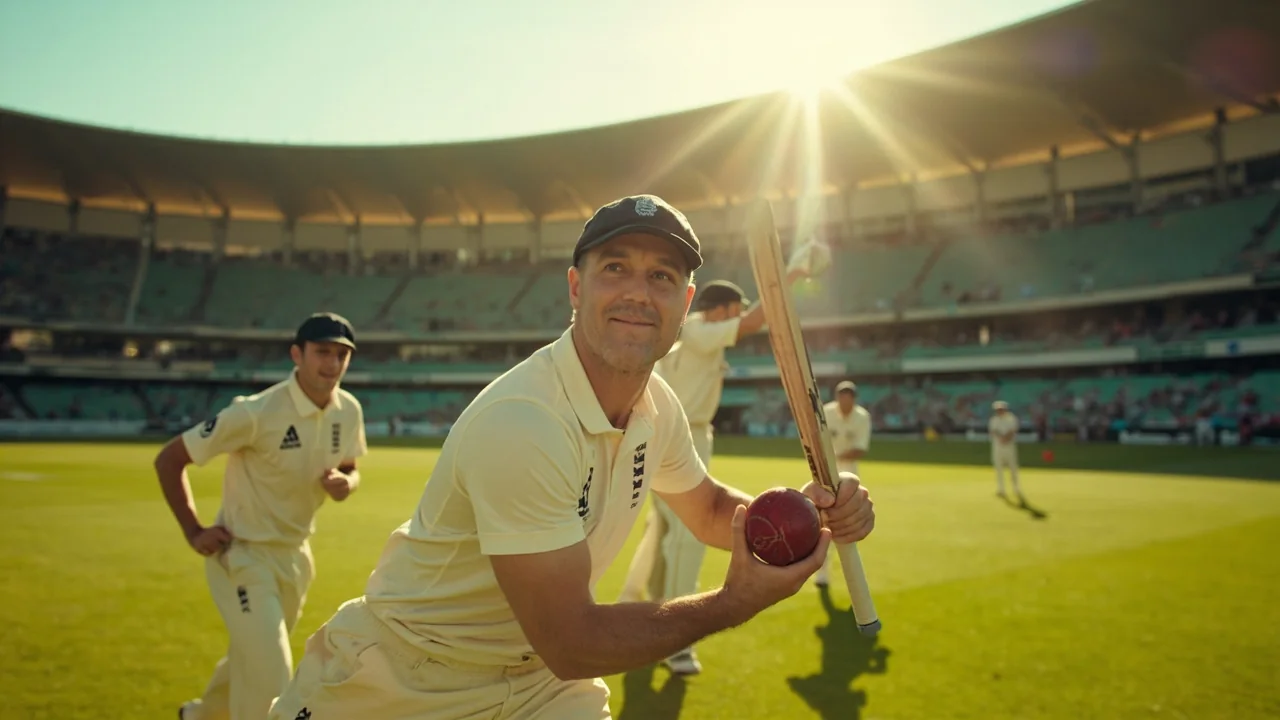
Editorial illustration for the 3rd ODI between England and India at Lord’s
Lord’s series decider — assumptions stated below, not buried.
Chapter 01 · Direct answer

What the conditional call is, in one paragraph

If the surface stays in its usual Lord’s zone — early lateral movement for 6–8 overs, then a balanced track — India’s new-ball attack has a small edge in the powerplay, and Joe Root’s ability to convert a fifty into a hundred remains the single biggest match-up swing. The forecast therefore leans India by a narrow band, conditional on the toss going to them and Bumrah being used in the first six. Reverse either assumption — Bumrah held back, or England asked to bat first on a dry wicket — and the band should move toward parity, not freeze.

That paragraph is the entire forecast. Everything below explains how each input was weighted, where the assumption breaks, and what a fantasy team should change when a new input lands.

Chapter 02 · Match context

Where the two sides are actually starting from

Cardiff compressed India’s middle order and gave England a chase they could control. Lord’s will reward different skills.

01

How the series got to 1-1

England chased 234 at Cardiff with Root unbeaten on 99 after early setbacks. India were bowled out for 233, with Kohli and Iyer reaching fifties but the middle and lower order unable to convert. The series reset, and the third ODI becomes a winner-takes-all fixture.

02

Why Lord’s is a different puzzle

Lord’s usually offers seam movement with the new ball, flattens out, and brings dew into the second innings. The average first-innings ODI score sits near 232 — close to the Cardiff total — which means a par total is reachable without hero batting, and the powerplay becomes the swing window.

03

The Rohit conversation

Retirement chatter around Rohit Sharma was publicly closed by BCCI secretary Devajit Saikia before the decider. Operationally that removes a distraction but not a form question — Rohit’s starts in this series have been short, and Lord’s swing will punish any early flashing.

Chapter 03 · Inputs to the forecast

Six inputs, ranked by how much they move the call

1. Toss and first-innings decision

The team that chases has won 40 of 89 completed ODIs at Lord’s; teams batting first have won 44. The split is close, but the recent series pattern has favoured the chasing side when dew arrives in the second half. The forecast assumes India bowl first if they win the toss.

2. New-ball movement and overhead conditions

London weather on 19 July is forecast partly sunny at around 23°C with only a small rain chance. Cloud cover would lengthen the new-ball window for Archer and Bumrah. A flat, sunny afternoon shortens that window and pushes the band toward batting depth.

3. Bumrah’s workload

If Bumrah is held back to the middle overs to manage overs, Archer and Atkinson gain share of the powerplay — that tilts the early-wicket probability toward England. The forecast assumes Bumrah takes the new ball.

4. Root’s conversion rate

Root’s 99* at Cardiff is the single biggest indicator in the series so far. At Lord’s, where bounce is true and the outfield is quick, his range-hitting through cover is harder to set fields against. The forecast assumes Root bats in the top four.

5. India’s middle order

Iyer and Rahul have starts but no long innings in this series. If either converts a fifty into a hundred, the chase becomes a chase of 240 rather than 260. If both fall in the 30–50 band, India are again dependent on the top three.

6. Spinners in the middle phase

Axar Patel and Adil Rashid will get turn only if the pitch roughs up. A green-tinged Lord’s pitch reduces that option and forces captains back to pace, raising the value of Atkinson and Krishna in the death overs.
Expiry: This forecast is held until the toss at 3:00 PM IST. After the toss, update inputs 1, 3 and 6 before locking captain.
Chapter 04 · Probable XIs

Playing XIs as reported, with fantasy-relevant notes

England (probable)

  1. Ben Duckett
  2. Jacob Bethell
  3. Joe Root
  4. Harry Brook (c)
  5. Jos Buttler (wk)
  6. Will Jacks
  7. Sam Curran
  8. Gus Atkinson
  9. Jofra Archer
  10. Saqib Mahmood
  11. Adil Rashid

Fantasy note: Root and Brook carry the heaviest batting weight; Archer and Atkinson split new-ball and death overs.

India (probable)

  1. Rohit Sharma
  2. Shubman Gill (c)
  3. Virat Kohli
  4. Shreyas Iyer
  5. KL Rahul (wk)
  6. Shivam Dube
  7. Axar Patel
  8. Washington Sundar
  9. Jasprit Bumrah
  10. Gurnoor Brar
  11. Prasidh Krishna

Fantasy note: Bumrah is the captaincy anchor if India bowl first; Axar’s points swing on whether the pitch roughs up.

Chapter 05 · Reading checklist

Three passes through the day-of evidence

  • First pass — pre-toss: lock probable XIs, identify your three captaincy candidates, and do not submit until inputs 1 and 3 above are confirmed.
  • Second pass — at toss: if India bowl first and Bumrah opens the bowling, the captain call leans to Rohit or Kohli. If England bowl first and Archer takes the new ball, the captain call leans to Root or Brook.
  • Third pass — after the first two overs: check swing amount on the scoreboard (dot-ball %, runs conceded). A low-scoring powerplay moves the captaincy to the bowler; a flat powerplay moves it to the set batter.
Chapter 06 · Three conditional scenarios

Same XI, three different match states

Scenario A · Green Lord’s

Pitch offers seam all day

Archer and Bumrah share six powerplay wickets between them. Captaincy: Archer. Fallback: Atkinson if Archer is rested for a fourth ODI workload. Avoid: top-order anchors priced above 10 credits.

Scenario B · Flat Lord’s

Pitch flattens after 10 overs

370 becomes a live target. Captaincy: Root. Fallback: Kohli if India bat first and reach 280+. Avoid: second-spell bowlers unless the innings goes deep.

Scenario C · Dew chase

Dew arrives in the 30th over

Chasing side wins 7 out of 10 such matches at Lord’s over the last cycle. Captaincy: Rohit or Brook on a chasing run. Fallback: any set top-four batter at the 35-over mark.

Chapter 07 · Fantasy-team drafts

Two drafts that respect the conditional call

Draft 1 · If India bowl first

Captain Rohit Sharma · Vice-captain Joe Root · Keepers Jos Buttler · Batters Virat Kohli, Shreyas Iyer · All-rounders Sam Curran, Axar Patel · Bowlers Jasprit Bumrah, Jofra Archer, Gurnoor Brar, Gus Atkinson

C Rohit Sharma · VC Root

Draft 2 · If England bowl first

Captain Virat Kohli · Vice-captain Shubman Gill · Keepers KL Rahul · Batters Joe Root, Harry Brook, Jacob Bethell · All-rounders Will Jacks · Bowlers Jasprit Bumrah, Jofra Archer, Prasidh Krishna, Saqib Mahmood

C Kohli · VC Gill

Players to avoid: Ishan Kishan and Shivam Dube look short on batting points if either middle order gets squeezed by the new ball. Reconsider only if confirmed in the playing XI.
Chapter 08 · Reading the hub

How this forecast fits the Match Prediction Lab

The Cricket Match Prediction Lab is built around the idea that a forecast is a conditional view, not a guaranteed outcome. This article is a worked example of that principle for a live fixture: assumptions are listed, an expiry point is named, and the call is rewritten the moment one of those assumptions breaks. To see the same framework applied to other upcoming fixtures, return to the Cricket Match Prediction Lab hub for fresh conditional forecasts throughout the series.

For readers who want to go deeper, the lab also explains how to read pitch reports, how captaincy points move the math, and how to set a responsible-play limit before locking any team.

Chapter 09 · Frequently asked

Three short answers

What changes if the toss goes the other way?

If India bat first, the seam-up early movement at Lord’s becomes more valuable for the new-ball bowlers and the Rohit-Kohli start carries more weight. If England bat first, Bethell-Root-Brook need to convert a start and the dew window at the chase becomes the deciding factor.

Which bowlers move the fantasy math the most?

Jasprit Bumrah and Jofra Archer on a fresh ball; Axar Patel and Adil Rashid once the ball is older. Saqib Mahmood’s extra pace is also a wildcard if Lord’s offers lateral movement under overcast skies.

When should a fantasy team be revised?

After the toss and after the first two overs. Before that, treat the forecast as conditional and avoid locking the captain pick.

Next fixture? Fresh conditional forecasts are posted the morning of every ODI and T20I on COME’s desk.

Read the responsible-play note