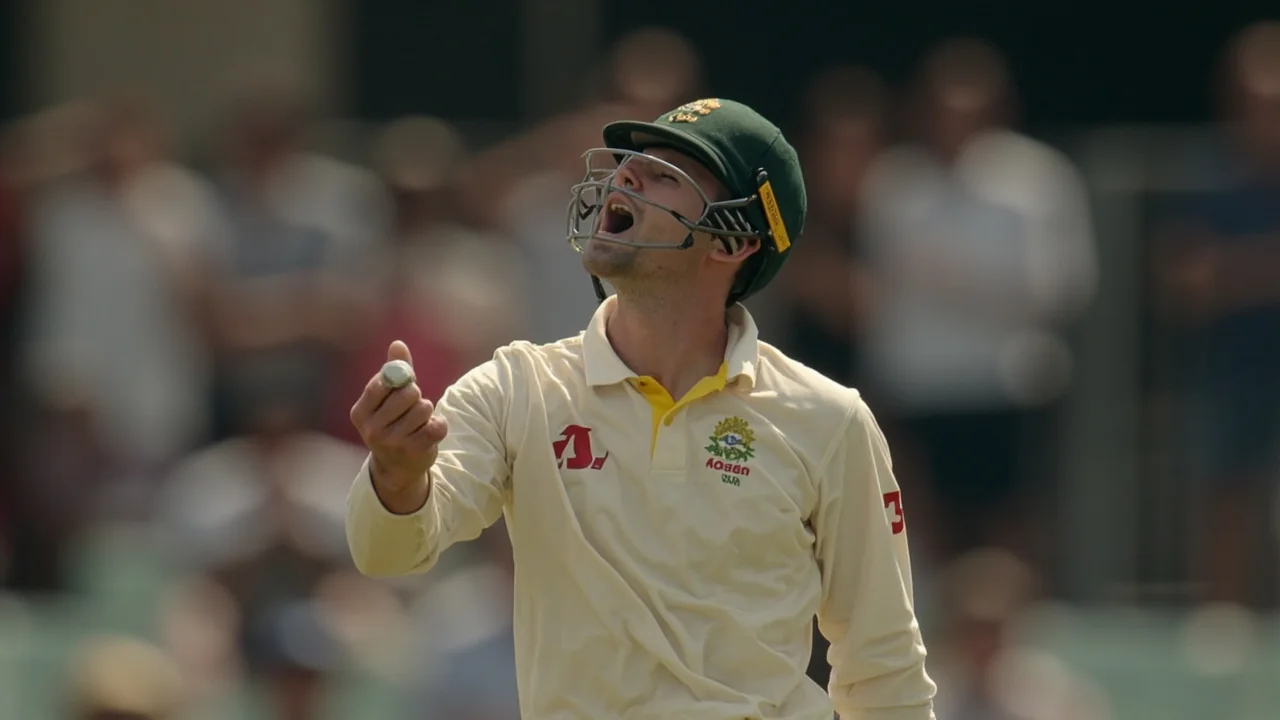
Australia's home Test summer opens at a venue the senior team has used only sparingly, against a Bangladesh side that has not played a Test in Darwin this century. The first innings will be bowled on 13 August. Everything before that moment — McDonald's press comments, Inglis's flare-up, the Brisbane hit-outs, the squad balance — is preparation evidence, not prediction. Reading it correctly matters more than ever because the World Test Championship ledger resets with this series.
The WTC cycle gives context to selection calls that might otherwise look routine. Each Test in this two-match series contributes percentage points to the next final, and the home side knows how thin the margin becomes when early tours are dropped. That lens turns the choice of wicketkeeper, the management of an established batter's workload and the use of intra-squad match practice into questions with multi-year consequences rather than single-match consequences.
Why the WTC reset changes Australia's decision math
A new World Test Championship cycle is rarely discussed in the language of finance, but the analogy fits. Every Test result credits or debits a team's ledger against a percentage of available points. Two Tests are a modest deposit, yet the same two Tests set the tone for the away block that follows. Australia, like every other Full Member, will measure the new era partly by how the 2025–27 cycle opens. For a longer view of how the home summer connects to fantasy plans, the Cricket Match Prediction Lab collects every Australia tour read in one place.
The head coach has been careful not to overstate that picture. When McDonald spoke to Cricket.com.au about Inglis, his priorities were the imminent Test, not the cycle. Still, the cycle is the framework a reader can use to weigh selection news. A confirmed starter carries more value when his contribution feeds into a multi-year table, and a fitness gamble carries a different cost in August than it would in a one-off summer fixture.
Australia's away calendar after this series will include Asia and England — surfaces where wicketkeeper-batting depth, seam-bowling rotation and a settled middle order each have a price. Selection choices at the start of a cycle should therefore privilege players who can absorb those conditions over the next 18 months. Inglis's age, his keeping skill and his recent batting form make him part of that horizon. Treating one back spasm as a selection crisis would force Australia to break a longer plan for a short-term concern.
Where Inglis stands: confirmed available, not yet fit
McDonald gave a layered answer on 5 August. The clearest line was that the head coach expects Inglis to be available for the first Bangladesh Test in Darwin. The next line was the qualifier: the same back problem has bothered Inglis before, and this episode is being treated as a recurrence rather than a fresh injury. The third line was procedural — the staff will let the spasm settle before Inglis returns to the nets.
Those three statements describe three different points on the same timeline. Inglis has been publicly endorsed as available. He has not been publicly cleared to resume full training. He has not been listed in a final XI. Fantasy readers who treat those three statements as one will overstate the certainty. Fantasy readers who treat them as three separate signals will keep their own plans proportionate.
The Brisbane hit-out itself matters for the same reason. McDonald said the squad worked through about 60 overs a day across two match simulations and described the intensity as approaching that of a fully fledged game. Inglis's flare-up happened in that context, which means it happened under the kind of load he will face in a Test. That detail is reassuring, not alarming — the staff can compare his recovery against a familiar preparation benchmark. It also raises a small caution: any player who experiences a back issue in that exact environment must be watched through the first net session after the camp.
What the Brisbane simulations actually told the staff
Australia have made intra-squad match practice a recurring part of their Test preparation, and the Brisbane camp followed that pattern. McDonald's description — about 60 overs per day, intensity raised to that of a real fixture — matches what the staff have used for India and England series. The point of those days is not volume. The point is decision density: captaincy, field placements, workload monitoring and the small tactical adjustments a batter can only practise against a real bowler.
For the players who got through the camp without incident, the simulations give McDonald recent, comparable evidence about form and role. Cameron Green spent time in the middle. Nathan Lyon bowled long spells. Mitchell Starc, Beau Webster and Jake Weatherald were among those who took match practice. None of those names have been confirmed in the Test XI, but each has produced the kind of evidence the selectors value when a final eleven must be picked.
For Inglis, the simulations gave the staff something different — a controlled environment in which his body could be tested at match pace before a decision had to be made. The fact that he cut short his involvement after a back spasm means the system worked: the flare-up surfaced inside a setting built to catch it, not in a Test where a late change would have been costly. The remaining task is to manage the recovery with the same discipline the camp applied to the original test.
Reading the probable XI without overstating it
Australia's selectors typically announce the XI on the morning of the Test, often after a final net session. Until then, every name in the conversation is a candidate, not a starter. The Brisbane camp did not change that. It tightened the working shortlist by giving selectors comparable performance evidence across two days of match-intensity cricket, and by removing players whose involvement ended early from the immediate conversation.
The reading habit is to separate role security from selection. Pat Cummins is the captain and the team's first-choice quick. Mitchell Starc, Josh Hazlewood and Cummins have all been managed in recent tours. Nathan Lyon is the senior spinner. Marnus Labuschagne, Steve Smith, Travis Head and Cameron Green have held middle-order spots across multiple series. Those roles are stable enough to build fantasy plans around. Usman Khawaja and David Warner have been part of recent plans but each carries a workload conversation of his own. Treat those names accordingly: as the working XI, not the locked XI.
The wicketkeeping question sits inside that frame. Inglis has been working with the gloves and has been publicly backed by the head coach. Alex Carey remains an experienced option and has been used in similar fitness-driven situations. The right reading of the verified record is that Inglis is the working candidate and Carey is the prepared alternative. Selecting one of them with absolute confidence before the XI is named would treat a confirmed fitness conversation as a confirmed squad pick, which it is not.

Fantasy angle: keep the role, scale the certainty
For anyone building a fantasy side around this match, the verified news suggests three practical adjustments. First, treat Inglis's wicketkeeping role as expected rather than guaranteed. Second, give selectors time to finish their work — the official XI is the moment the picture becomes decisive, not the press conference. Third, build the rest of the XI so that a late Inglis change does not require several unrelated swaps.
Test fantasy scoring rewards repeated involvement. A wicketkeeper who keeps through both innings and bats in the middle order has a different points ceiling from a wicketkeeper who is replaced after a short stay. The decision ladder for Inglis is therefore about how much of that ceiling you trust before the toss. The reasonable answer is: most of it, because the head coach has spoken, and none of it until the XI is named.
Captaincy in a Test is a multiplier decision, not a certainty decision. The verified record on Inglis does not say he has completed a full return to batting practice, that his workload will be unrestricted or that his position in the order is fixed. Multiplier positions on a fantasy side should usually go to players whose preparation is complete and whose role is settled. The Brisbane camp helps every member of Australia's probable XI on the second count. It helps Inglis less than the others on the first.
Bangladesh's bowling attack — likely to feature a left-arm orthodox spinner and a seam-bowling all-rounder working in partnership — should also influence captaincy. Spinners tend to be more involved in Darwin's afternoon sessions than they are in cooler Australian venues, which can lift a second-spinner's points ceiling. The fantasy framework for this series is therefore Inglis as a probable keeper, the Australian quicks as probable wicket-takers, and a Bangladesh spinner as a probable differential rather than a confirmed pick.
Three checks before the toss
- Official XI: confirm Inglis is named rather than relying only on the head coach's availability line.
- Wicketkeeping role: verify who keeps the gloves, since fielding opportunity is a major part of his fantasy profile.
- Late update: check for any further report after Australia complete their final training days in Brisbane and again in Darwin.
Series schedule and what each venue demands
Australia will play two Tests on this tour. The first, in Darwin, runs from 13 to 17 August. The second, in Cairns, runs from 21 to 25 August. The opener begins a new World Test Championship cycle for both teams. The second Test will let selectors compare form and workload before the squad moves on to subsequent tours.
| Match | Venue | Dates | Cycle role |
|---|---|---|---|
| First Test | Darwin | 13–17 August 2026 | Opens Australia's 2025–27 WTC table |
| Second Test | Cairns | 21–25 August 2026 | Comparison test before the away tours |
The geographic spread matters for fantasy readers. Cairns is a tropical venue with late-afternoon humidity, while Darwin sits further west and can produce harder, drier surfaces in mid-August. Reading conditions accurately needs different inputs from each ground, and that work begins after the XI is confirmed rather than before. For pre-toss planning, treat both Tests as a pair — the same selection debate runs across them, and the Bangladesh response is shaped by what happens in the first innings.
Reading the camp with responsible-play limits in mind
Selection news of this kind can push fantasy readers toward bigger entries than they would normally place. The verified material here is an injury update, a coach's confidence statement and a series schedule. None of those facts change the basic responsibility of any cricket fan: spend only what entertainment allows, set a fixed budget before opening a contest, and pause the moment a session stops being enjoyable. A positive coach's comment about a player is a reason to plan more carefully, not a reason to raise the stake.
There is also a temptation to read positive team news as a green light for a larger field, higher-multiplier contests or chasing positions that did not exist an hour earlier. The simpler path is the responsible one — keep the build proportionate, leave the late change options open, and treat confirmed XI as the moment to act rather than press comments. McDonald's words carry weight because of his role. They do not carry a financial instruction.
The next signal that changes the read
The next decisive update will not be another broad availability statement from McDonald. It will be a sequence of ordinary confirmations: Inglis returns to a full net session, Australia name their XI, the wicketkeeping role is listed without restriction. Once those steps are public, the conditional reads that have applied all week collapse into a single confident picture.
For fantasy readers who work to that cadence, the responsible plan is unchanged. Keep Inglis in the probable XI. Treat every other selection as part of the same working framework — workload managed, role expected, fitness reviewed. Watch the next confirmed net session, then the XI, then the toss. The verified record on 5 August gives a coherent foundation for that plan. It does not give permission to skip its steps.
The summer will be measured by what Australia do once the first over is bowled at Marrara. Until then, a coach's measured words, a back spasm that has happened before and a Brisbane camp that ran two full-intensity days are the working evidence. Read them as preparation, not as prediction.
Source note: This report is drawn from Cricket Addictor's coverage of 5 August 2026, based on Andrew McDonald's remarks to Cricket.com.au after Australia's intra-squad match in Brisbane. No facts beyond the verified report have been added.